Renting out a property can provide a regular income while allowing you to retain ownership of your real estate. Whether you own a flat, apartment, independent house, villa or commercial space, proper planning can make the rental process smoother.
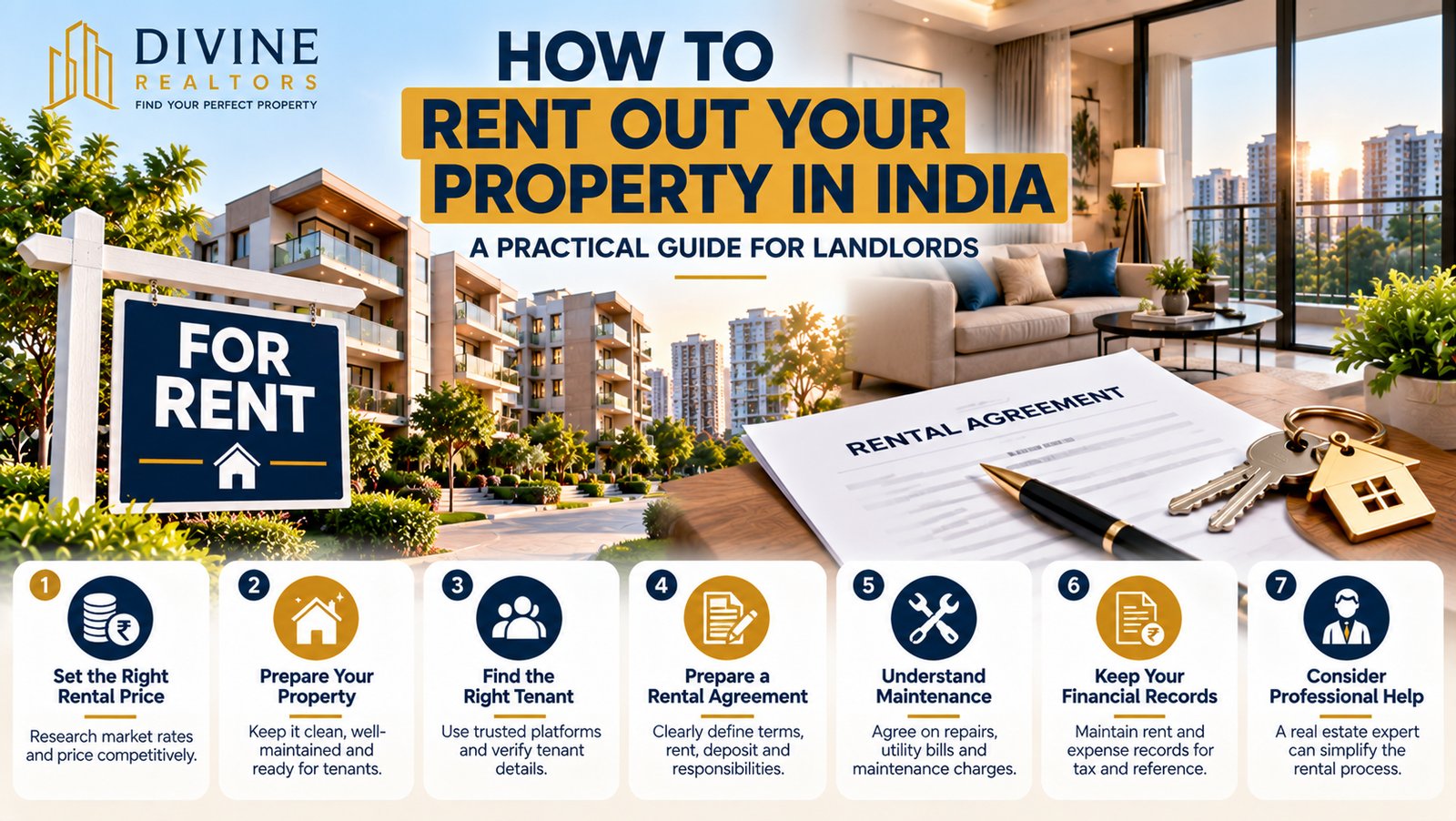
Here are seven important steps to consider before renting out your property.
1. Set the Right Rental Price
Research similar properties in your area to understand the prevailing rental rates.
Consider the property’s location, size, furnishing, amenities, parking and overall condition before deciding on the monthly rent.
A competitive price can help attract suitable tenants.
2. Prepare Your Property
A clean, well-maintained property can make a better impression on prospective tenants.
Before advertising, consider:
- Repairing plumbing and electrical issues
- Checking doors, windows and fittings
- Cleaning kitchens and bathrooms
- Ensuring water and electricity facilities work properly
- Improving lighting and ventilation
Small improvements can make the property more appealing.
3. Find the Right Tenant
Advertise your property through suitable online platforms, local networks or a real estate professional.
Screen prospective tenants appropriately and verify relevant identity, employment or financial information where lawful and appropriate.
Clear communication from the beginning can help establish a professional relationship.
4. Prepare a Rental Agreement
A written rental agreement helps clarify the responsibilities of both parties.
Depending on the arrangement, include:
- Monthly rent and payment date
- Security deposit
- Lease duration
- Maintenance responsibilities
- Notice period
- Rules for property use
- Conditions for ending the tenancy
Check the applicable state laws and registration or stamp-duty requirements before finalising the agreement.
5. Understand Maintenance Responsibilities
Before handing over the property, agree on how routine maintenance, repairs, utility bills and society charges will be handled.
Record the property’s condition and document any existing damage to reduce the risk of disputes later.

6. Keep Your Financial Records
Maintain records of rent received, deposits, repairs, maintenance charges and other property-related expenses.
Rental income may have tax implications, so understand the applicable tax rules and seek professional advice when necessary.
7. Consider Professional Property Management
If you live in another city or have limited time, a real estate professional or property manager may help with tenant enquiries, viewings, rent coordination and maintenance communication.
Compare the services and fees before appointing a professional.
Final Thoughts
Renting out a property involves more than finding a tenant. Realistic pricing, property maintenance, tenant verification, a clear rental agreement and organised records can help make the experience more manageable.
At Divine Realtors, we deal in residential flats and apartments, independent houses and villas, plots and land, and commercial properties.
Looking to rent out or find a property? Connect with Divine Realtors to explore your real estate options.
Frequently Asked Questions
How do I rent out my property in India?
Set a competitive rental price, prepare the property, find a suitable tenant, complete the rental agreement and understand the applicable legal requirements.
Is a written rental agreement necessary?
A written agreement is strongly advisable because it records the terms agreed by the landlord and tenant. Applicable stamp-duty and registration requirements should also be checked.
How can I find reliable tenants?
Advertise accurately, communicate clearly and carry out appropriate tenant verification in accordance with applicable laws.
Should I hire a real estate agent to rent out my property?
A real estate agent can assist with marketing, enquiries, viewings and tenant coordination. Consider the services, experience and fees before deciding.