When buying a property, you may come across the terms freehold and leasehold.
Understanding the difference is important because the type of ownership can affect your rights, responsibilities, transfer process and long-term plans.
What Is a Freehold Property?
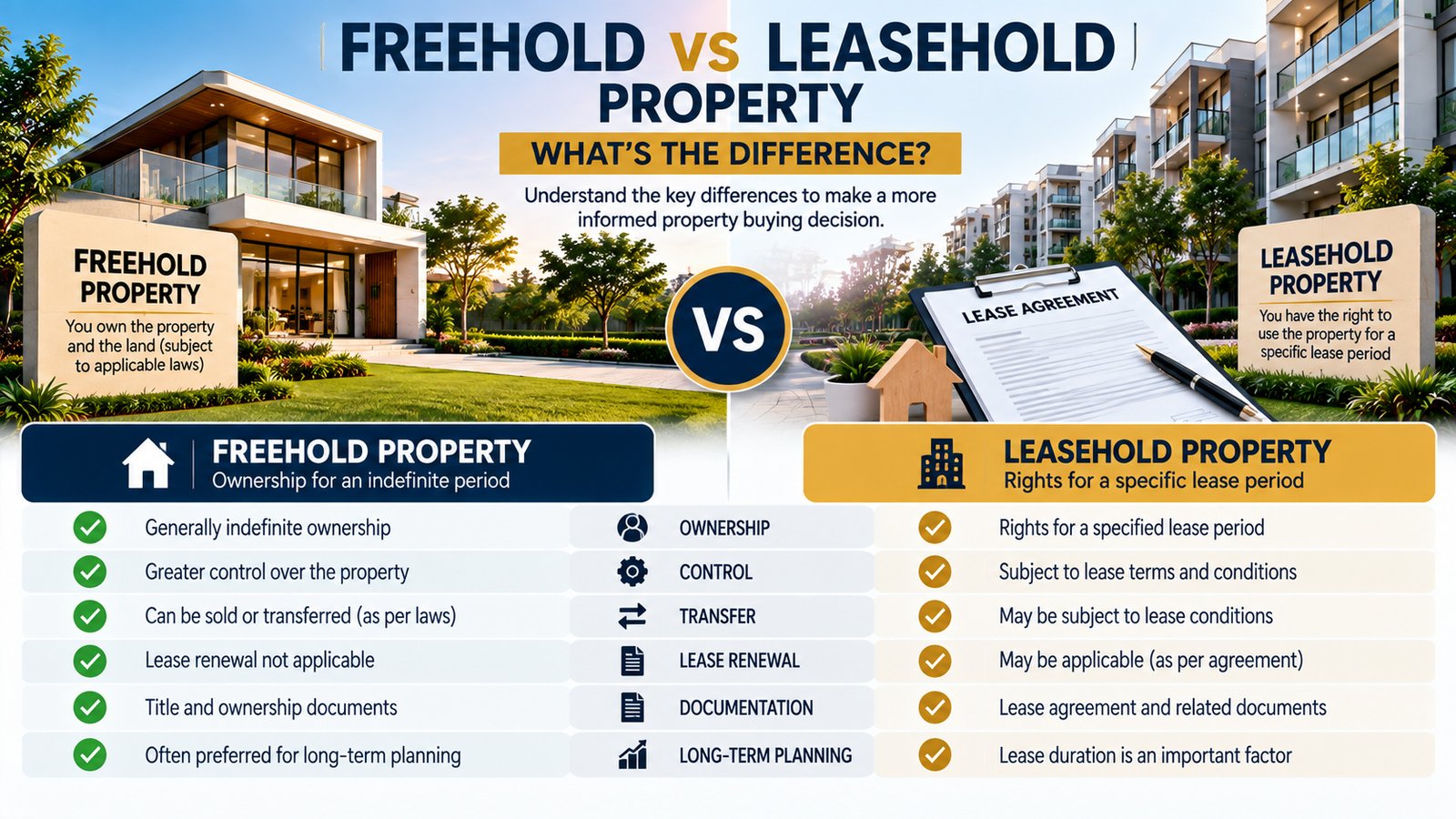
A freehold property generally means the owner holds the property rights for an indefinite period, subject to applicable laws and regulations.
The owner typically has greater control over the property and can sell, transfer or otherwise deal with it according to the applicable legal framework.
Freehold properties can include certain:
- Houses
- Villas
- Plots
- Apartments
The exact ownership rights should always be confirmed through the property’s documents.
What Is a Leasehold Property?
A leasehold property is held under a lease for a specified period according to the terms of the lease.
The buyer or leaseholder may have rights to use and occupy the property for the duration of the lease, while the underlying ownership may remain with another party.
Lease terms can vary significantly, so buyers should carefully review the agreement.
Why Does This Matter When Buying Property?
The ownership structure can affect your long-term plans.
Before buying, understand:
- Who owns the land
- What type of ownership is being transferred
- Duration of any lease
- Transfer conditions
- Renewal provisions
- Applicable fees
- Restrictions on use or sale
What Should Buyers Check?
Before purchasing, review the relevant property documents and verify the ownership structure.
For a leasehold property, pay particular attention to:
- Remaining lease period
- Lease terms and conditions
- Renewal provisions
- Ground rent or other applicable charges
- Transfer requirements
- Permissions required from the relevant authority
For either type of property, professional legal verification can help identify potential issues before you commit.
Which One Should You Choose?
There is no universal answer.
A property should be evaluated based on its location, price, ownership documents, legal status, lease terms, intended use and long-term plans.
Don’t choose a property solely because it is freehold or leasehold.
Final Thoughts
Understanding property ownership is an important part of making an informed real estate decision.
Before buying a house, villa, plot, apartment or commercial property, make sure you understand what exactly you are purchasing and what rights come with it.
At Divine Realtors, we help buyers explore residential flats and apartments, independent houses and villas, plots and land, and commercial properties.
Looking for your next property? Explore your options with Divine Realtors and make your property search more informed.
Frequently Asked Questions
What is a freehold property?
A freehold property generally provides ownership rights for an indefinite period, subject to applicable laws and restrictions.
What is a leasehold property?
A leasehold property provides rights to use or occupy the property for a specified period according to the lease terms.
Is freehold better than leasehold?
The suitability depends on the property, location, price, legal documents, lease terms and the buyer’s long-term plans.
Can a leasehold property be sold?
Transfer of a leasehold property may be possible, but it can be subject to the lease agreement and applicable rules.
What should I check before buying a leasehold property?
Check the remaining lease period, lease conditions, renewal provisions, applicable charges, transfer requirements and relevant ownership documents.