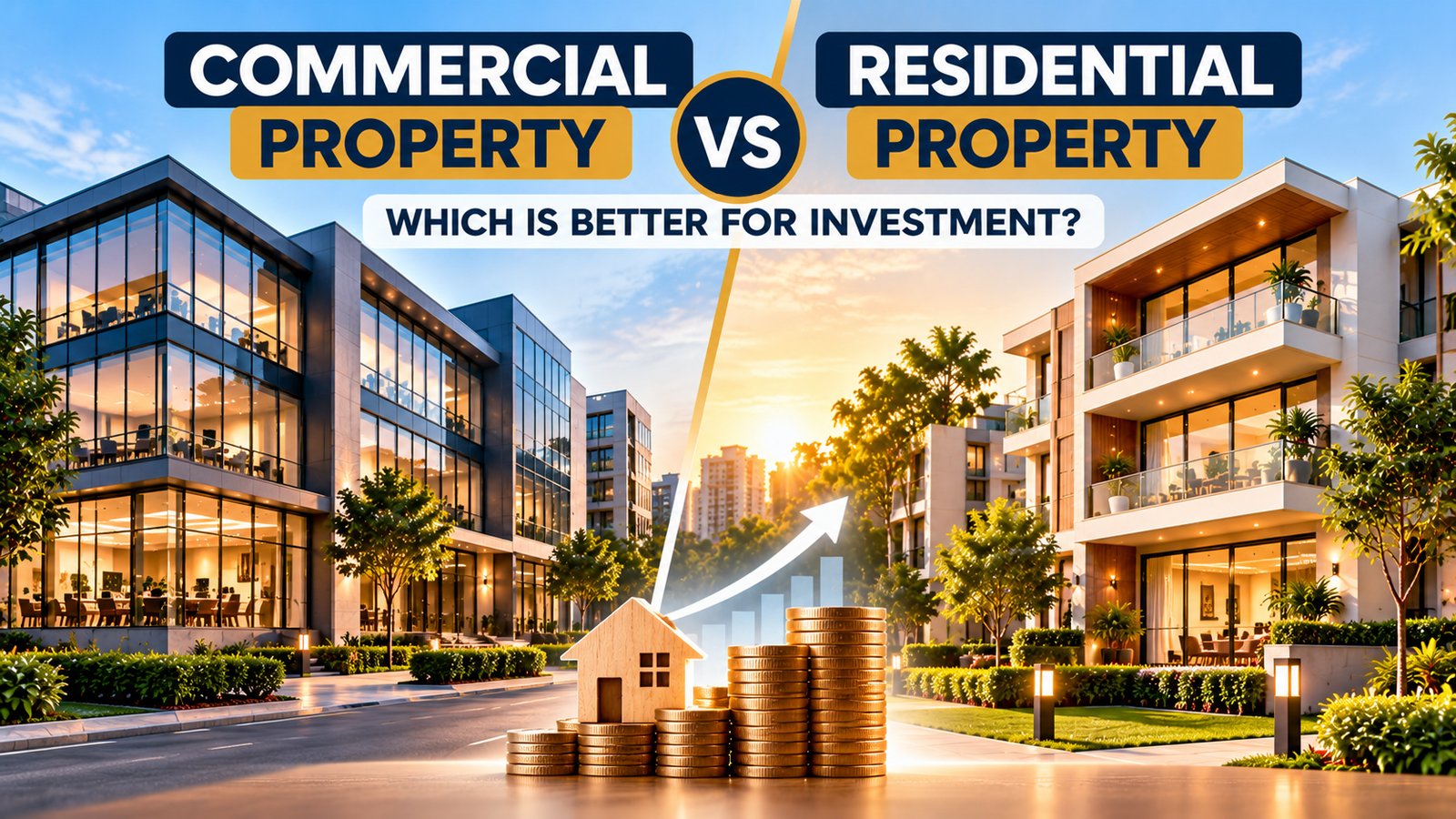
Choosing between commercial and residential property depends on your budget, investment goals and willingness to manage the property. Both options can offer rental income opportunities, but they differ in costs, tenants and market demand.
What Is Residential Property?
Residential property is designed for people to live in. Common examples include:
- Flats and apartments
- Independent houses
- Villas
- Residential homes
Residential properties may appeal to investors because housing is an essential need, and demand can come from families, working professionals and students.
What Is Commercial Property?
Commercial property is generally used for business activities. Examples include:
- Retail shops
- Offices
- Showrooms
- Commercial buildings
- Warehouses
Its performance often depends on business activity, location, accessibility and demand from commercial tenants.
Commercial vs Residential Property
1. Compare Your Investment Budget
Residential properties may offer more entry-level options, such as smaller apartments. Commercial properties can require a larger investment in some locations, although smaller shops and offices may also be available.
Compare the total purchase price, registration costs, financing and ongoing expenses before deciding.

2. Understand Rental Income Potential
Commercial properties may offer attractive rental income in suitable locations, but returns are not guaranteed.
Residential properties may appeal to a wider pool of tenants in areas with strong housing demand.
Evaluate actual local rents rather than relying on advertised returns.
3. Consider Location Carefully
For residential property, proximity to schools, hospitals, transport and workplaces can influence demand.
For commercial property, visibility, footfall, parking, accessibility and nearby business activity may be particularly important.
The right location depends on the property’s intended use.
4. Understand Vacancy Risks
A vacant property can create financial pressure because expenses may continue even when no rent is received.
Commercial vacancies can sometimes last longer if a space needs specialised tenants or modifications. Residential properties can also experience vacancies depending on location and market conditions.
Keep sufficient funds available to manage periods without rental income.
5. Check Legal Requirements
Before investing, verify the property’s ownership documents, applicable approvals, permitted use and other relevant records.
For commercial properties, check that the intended business activity is permitted at the premises.
Professional legal and financial advice can help you evaluate the transaction.
Which Property Is Better for You?
Consider residential property if you:
- Prefer investing in housing
- Want to explore apartments, houses or villas
- Have a budget suited to residential options
- Understand the local rental market
Consider commercial property if you:
- Understand local business demand
- Have assessed the higher costs that may apply
- Can evaluate commercial lease terms
- Are comfortable with business-related vacancy risks
Neither option is automatically better. Your decision should reflect your finances, goals and the specific property.
Final Thoughts
The choice between commercial and residential property comes down to more than rental income. Location, purchase price, demand, maintenance, vacancy risk and legal requirements all matter.
At Divine Realtors, we help buyers explore residential flats and apartments, independent houses and villas, plots and land, and commercial properties.
Looking for a property that suits your goals? Connect with Divine Realtors to explore your options.
Frequently Asked Questions
Is commercial property better than residential property?
Not always. Commercial property may offer attractive rental opportunities in suitable locations, while residential property can benefit from housing demand. Each carries different risks and costs.
Which property is better for rental income?
It depends on local rental demand, property price, expenses, tenant availability and lease terms. Compare net income rather than rent alone.
Is commercial property more expensive than residential property?
Some commercial properties require a larger initial investment, but costs vary significantly by property type, size and location.
What should I check before investing in property?
Review the purchase price, ownership documents, permitted use, local demand, ongoing expenses, vacancy risks and potential rental income.