Down payment for property is an important part of buying a property and one of the first costs many buyers need to plan for. But how much money do you actually need upfront?
Your upfront cost can include the down payment, registration charges, taxes, loan-related expenses, and other applicable costs.
What Is a down payment for property?
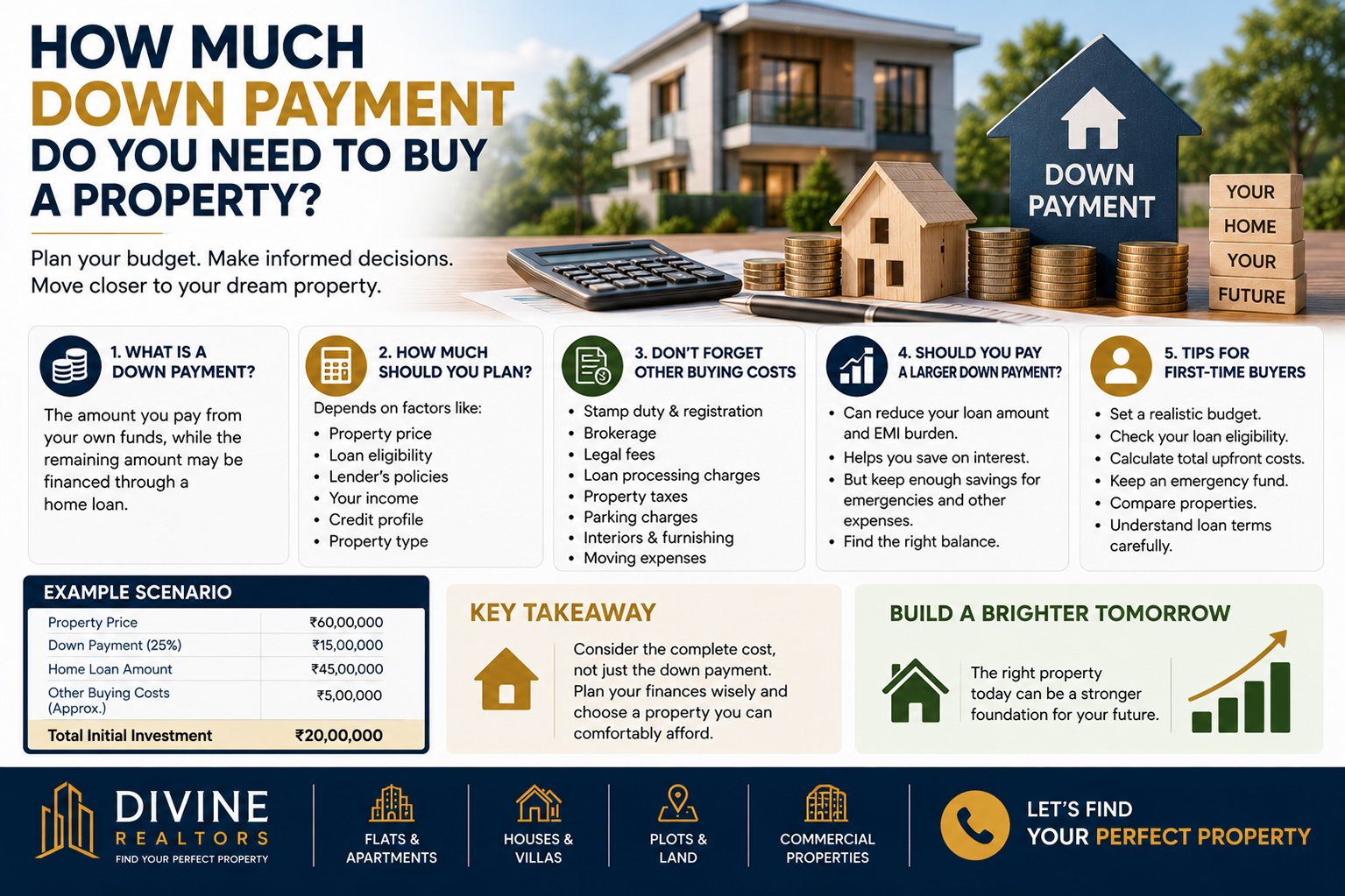
A down payment is the amount you pay from your own funds toward the purchase of a property, while the remaining eligible amount may be financed through a home loan.
For example, if a property costs ₹60 lakh and you arrange ₹15 lakh from your own funds, the remaining amount may be considered for financing, subject to lender eligibility and applicable terms.
The actual loan amount depends on factors such as your income, credit profile, property value and lender policies.
How Much Down Payment Should You Plan?
There is no single amount that works for every buyer.
Your required contribution can depend on:
- Property price
- Loan eligibility
- Lender’s policies
- Your income
- Credit profile
- Existing financial commitments
- Property type
Don’t use all your savings for the down payment. Keep a separate financial buffer for emergencies and additional property-related expenses.
Don’t Forget Other Buying Costs
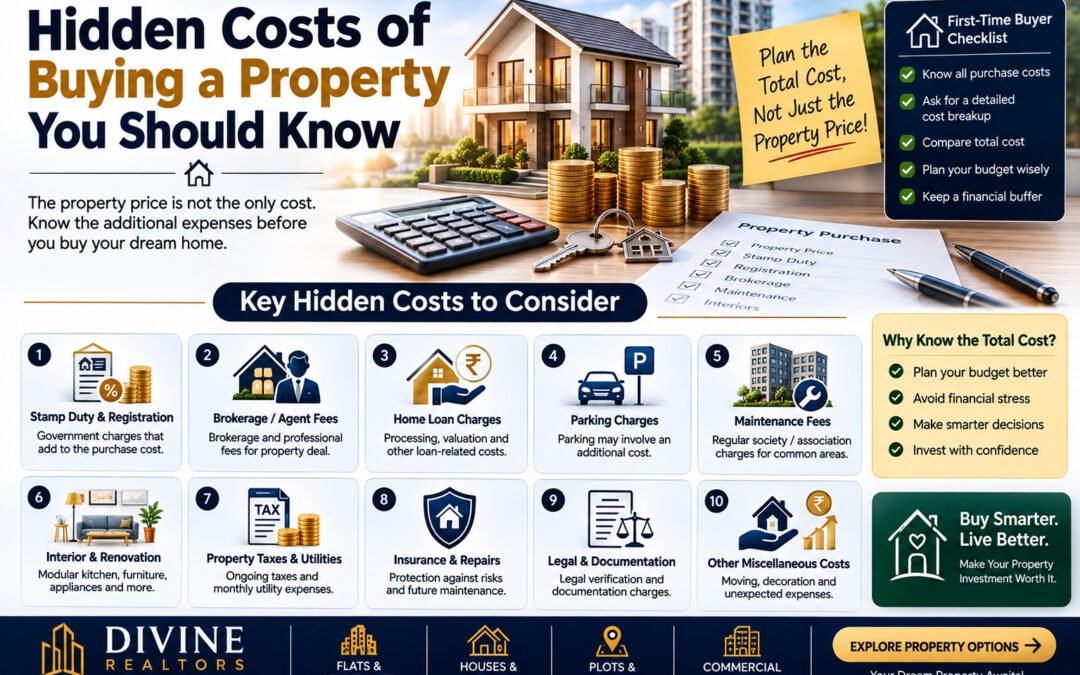
The down payment isn’t your only upfront expense.
You may also need to budget for:
- Stamp duty and registration
- Brokerage
- Legal fees
- Loan processing charges
- Property taxes
- Parking charges
- Interiors and furnishing
- Moving expenses
These costs can add significantly to your overall purchase budget.
Should You Pay a Larger Down Payment?
A larger down payment can reduce the amount you need to borrow, which may reduce your loan burden.
However, putting too much money into the property can leave you with limited cash reserves.
A better approach is to find a balance between:
Down Payment + Monthly EMI + Emergency Savings + Other Expenses
How Can First-Time Buyers Prepare?
Before looking for a property:
- Set a realistic budget.
- Check your potential loan eligibility.
- Calculate your upfront expenses.
- Keep an emergency fund.
- Compare suitable properties.
- Understand the loan terms carefully.
Most importantly, choose a property that you can comfortably afford rather than stretching your finances to the maximum.
Final Thoughts
Buying your first property becomes easier when you understand your complete financial requirement.
Don’t plan only for the down payment. Consider the loan, purchase charges, interiors, ongoing expenses and your emergency savings before making a decision.
At Divine Realtors, we help buyers explore flats and apartments, independent houses and villas, plots and land, and commercial properties.
Looking for the right property? Explore your options with Divine Realtors and take your next step with confidence.
Frequently Asked Questions
How much down payment for property is needed to buy a property?
The required amount depends on the property price, loan eligibility and lender terms. There is no fixed amount that applies to every buyer.
Can I use all my savings for a down payment?
It is generally better to keep sufficient savings aside for emergencies and other property-related expenses instead of using all available funds.
What other costs should I consider besides the down payment?
Consider applicable registration and stamp duty, brokerage, legal fees, loan charges, parking, interiors, furnishing and moving expenses.
Should first-time buyers make a larger down payment?
A larger down payment can reduce the amount borrowed, but buyers should also maintain adequate cash reserves. The right balance depends on your personal financial situation.